Our Thinking
Deliberately Developmental Organizations
What if an organization treated the development of its people not as a benefit or a training budget — but as the work itself?
What if developing people was the strategy, not a support function?
In most organizations, nearly everyone is doing a second job no one is paying them for: covering their weaknesses, trying to look their best, managing other people's impressions of them. This hidden expenditure of energy is not a personal failure — it is a rational response to an environment that has never signaled that it is safe to be otherwise.
Robert Kegan and Lisa Lahey's research, documented in An Everyone Culture, found a small number of organizations that had found a different way. These organizations — which they called Deliberately Developmental Organizations — had built systems in which overcoming internal barriers to growth was woven into the daily fabric of work. They treated human development not as a side benefit but as a core operating principle and a strategic advantage.
The culture you create, their research showed, is your strategy. And the key to building that culture is developing everyone — not just the high-potentials, not just through special programs, but as an expression of how work gets done every day.
“The culture you create is your strategy — and the key to success is developing everyone.”
An Everyone Culture — Kegan & Lahey
The design
Three elements every DDO shares
Despite their surface differences, the deliberately developmental organizations Kegan and Lahey studied shared a common architecture — three interlocking elements that together create the conditions for development to happen in the flow of work.
Edge
In a DDO, everyone has a productive developmental edge — something that actively stretches them — that is explicitly named, known, and worked with. The organization doesn't pretend that limitations don't exist; it builds systems for surfacing and engaging them. Everyone is known to have a growing edge. Having one is not a mark against you; it is simply the condition of development.
Groove
Development in a DDO isn't a special program or an annual off-site. It is woven into the regular, ongoing practices of work: the way meetings are run, the way feedback is given, the way decisions get made. The groove is the set of recurring practices that create a developmental rhythm in ordinary work life — making development not an interruption of work but an expression of it.
Home
Development requires vulnerability. You can't work at your growing edge without being seen — including your limitations. The home in a DDO is the psychological safety that makes this possible: the sense that you will be valued and held even as you struggle, that your imperfections are not disqualifying but are precisely the material the organization is committed to working with.
How do organizations become Deliberately Developmental?
Building a deliberately developmental culture is not a program you install. It requires a fundamental shift in how leadership thinks about people — from managing performance to developing capacity. It requires leaders who are themselves willing to be developed, who can model the vulnerability they are asking of others. The competitive advantage is not abstract: when individuals grow, the organization grows. The capacity that was locked up in self-protection becomes available for the work.
Incandescent and Minds at Work partner at this intersection — bringing the frameworks of adult development and Immunity to Change™ to organizations pursuing strategies that require them to break through the limits of how they currently operate. Learn about Incandescent →
The book
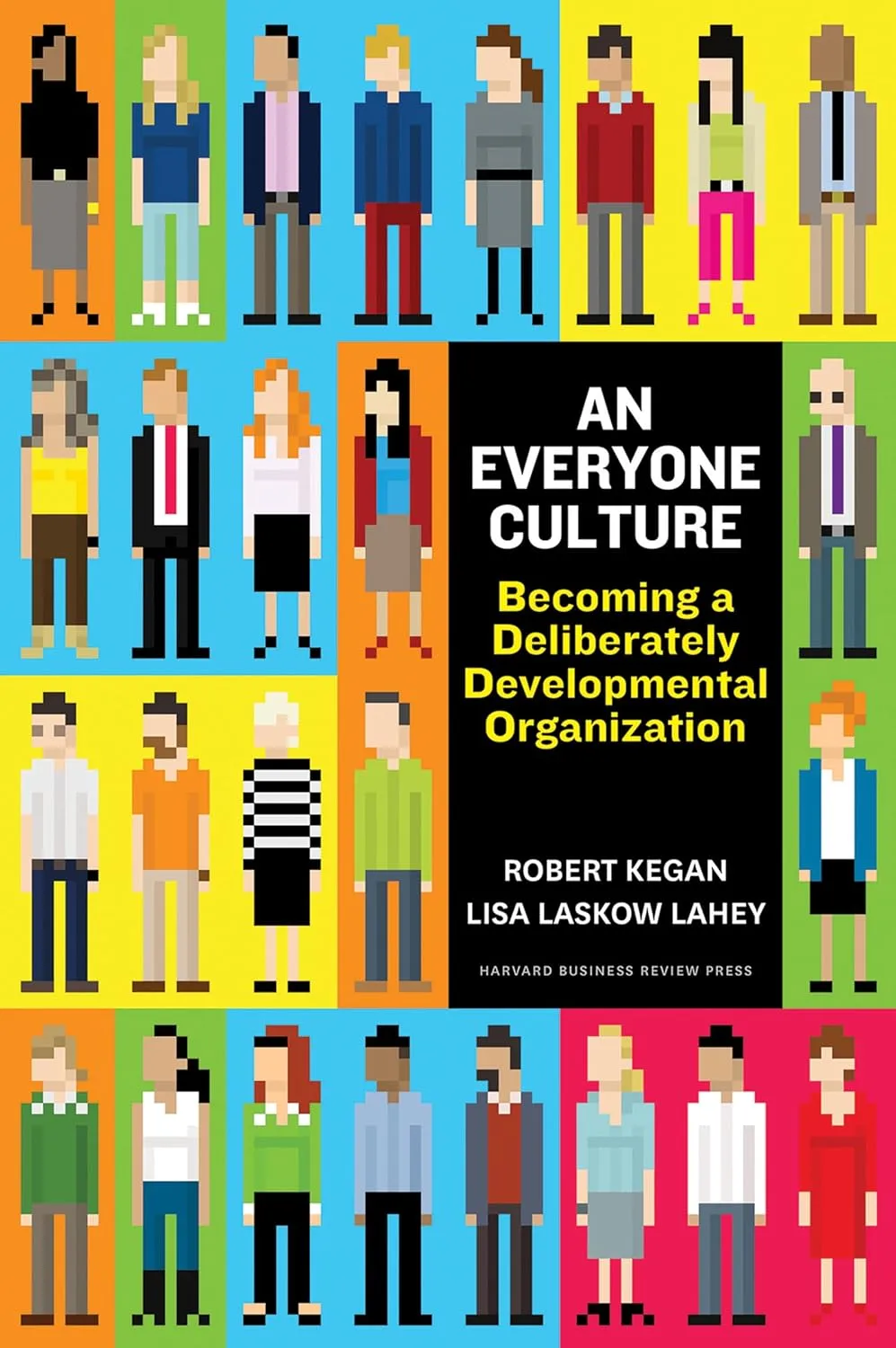
An Everyone Culture
Robert Kegan and Lisa Laskow Lahey
The research behind the DDO framework — including in-depth profiles of three organizations that have built deliberately developmental cultures, and the design principles, practices, and science at the heart of each. Shows how organizational culture functions as strategy, and how developing everyone is the key to both.
Buy on Amazon →Interested in making your organization a DDO?
Building a deliberately developmental culture takes more than a program. Reach out to start a conversation about what this work looks like in your organization.
Start the conversation →